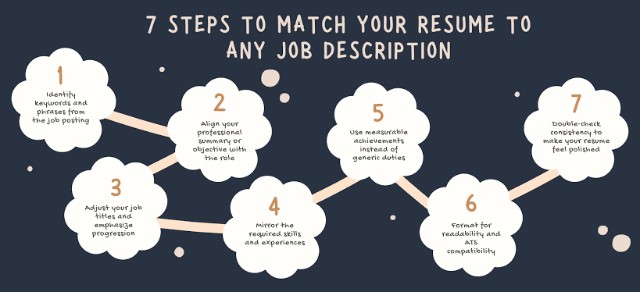
Resume keywords are terms that describe the skills, qualifications, tools, responsibilities, and experience required for a role. Employers use these terms when writing job descriptions, while recruitment systems and hiring teams use them to identify candidates who match the position. A resume that ignores this language may fail to show relevance, even when the applicant has the right background.
Online matching depends on specific signals, whether a person is searching for a role, comparing services, or looking for a lightning roulette app. Recruitment works in a similar way. If the words in a resume do not reflect the terms used in the vacancy, the application may receive a low match score or fail to appear in a recruiter’s search results.
What Counts as a Resume Keyword?
Resume keywords are not limited to technical skills. They can include several types of information:
- Job titles
- Professional skills
- Software and systems
- Certifications
- Industry terms
- Methods and processes
- Education requirements
- Management duties
- Performance measures
For example, a vacancy for a project coordinator may include terms such as project scheduling, budget tracking, stakeholder communication, risk management, reporting, and vendor coordination.
Each of these terms may function as a keyword. However, not every word in a job description has equal value. Candidates need to identify which terms reflect the core requirements of the role.
Start with the Job Title
The job title is often the first keyword to analyse. Employers and recruitment systems may search for candidates who have held the same or a related role.
If your official title differs from the market term, you can include both when they describe the same function. For example:
Client Operations Partner / Account Manager
This preserves the original title while making the role easier to understand.
Do not replace an official title with one that changes your level of authority. Keyword matching should improve clarity, not create a false impression.
Identify Repeated Terms
Read the job description several times and mark words or phrases that appear more than once. Repetition often shows what the employer considers important.
A vacancy may mention reporting in the summary, responsibilities, and required skills. In that case, reporting should appear in the resume if it reflects your experience.
Pay attention to variations of the same term. The employer may use “data analysis,” “performance analysis,” and “analytical reporting.” These phrases may point to one main requirement.
Repeated terms should influence the professional summary, skills section, and work experience bullets.
Separate Required and Preferred Keywords
Job descriptions often distinguish between required and preferred qualifications. The required terms deserve priority because they may be used as screening criteria.
For example, a role may require:
- Three years of account management experience
- Budget responsibility
- Contract negotiation
- Monthly performance reporting
It may also prefer:
- Experience in a regulated sector
- Knowledge of a second language
- Team leadership experience
A tailored resume should first show evidence for the required criteria. Preferred keywords can be included when they are accurate, but they should not replace the main qualifications.
Use Exact Language When It Is Accurate
Different employers may use different terms for the same activity. One vacancy may say “customer retention,” while another uses “client renewal.” If your experience covers both concepts, use the wording found in the vacancy.
This does not mean copying the entire job description. It means aligning the language where the meaning is the same.
For example, instead of writing:
“Worked with existing customers,”
write:
“Managed customer retention and contract renewal for a portfolio of 60 accounts.”
The revised sentence includes the employer’s language and gives context.
Place Keywords in the Right Sections
Keywords should appear where they make sense.
The professional summary can include the target role, years of experience, sector knowledge, and core skills. The skills section can list tools, methods, and areas of expertise. The work experience section should prove how those skills were used.
For example:
Summary: Operations manager with seven years of experience in process control, supplier management, and cost reduction.
Skills: Budget planning, supplier negotiation, workflow analysis, performance reporting.
Experience: Reduced supplier costs by 11% through contract review and quarterly negotiations.
This structure helps both screening systems and recruiters connect the keyword with evidence.
Avoid Keyword Stuffing
Keyword stuffing means repeating terms without adding meaning. A resume that lists the same phrase many times may look unnatural and difficult to read.
For example:
“Experienced in project management, project management tools, project management reporting, and project management processes.”
A stronger version would explain where the skill was applied:
“Managed six projects from planning through delivery, using milestone tracking and weekly status reports.”
The goal is not to achieve the highest possible keyword count. The goal is to show that the candidate has relevant experience.
Include Both Acronyms and Full Terms
Some employers use acronyms, while others use full names. When space allows, include both forms the first time a term appears.
For example:
“Managed customer relationship management systems.”
After that, the shortened form can be used.
This approach improves readability and supports different search methods. It is especially useful for certifications, systems, methods, and technical processes.
Support Keywords with Results
A keyword becomes more persuasive when it is connected to an outcome.
Instead of writing:
“Sales forecasting,”
write:
“Prepared quarterly sales forecasts that improved inventory planning and reduced stock shortages by 14%.”
This sentence shows the skill, method, and result.
Metrics may include revenue, time, volume, cost, accuracy, customer retention, conversion, or team size. When exact numbers are unavailable, describe the scope or process.
Review the Final Match
Before applying, compare the resume with the vacancy one more time. Check whether the main job title, required skills, tools, qualifications, and responsibilities are represented.
Confirm that every keyword is accurate and supported by your experience. Remove unrelated terms that dilute the application.
Resume keyword matching is not about copying an employer’s language without thought. It is a method of translating your experience into terms the employer already understands. When keywords appear in context and are supported by results, the resume becomes easier to find, easier to assess, and more likely to lead to an interview.
